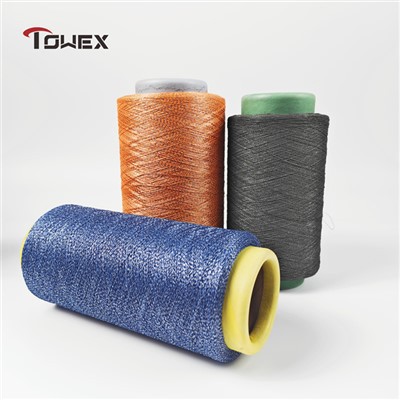
As a fiber and color yarn supplier, I’ve spent over a decade walking the line between the aesthetics that make our yarn stand out on shelves and the functional properties that make a difference to the customers who actually work with it. I’ve heard every version of the same question from knitters, weavers, and small-batch producers: “This yarn’s color is perfect, but it feels like it’s repelling water—how can I get it to absorb more?” It’s a gap I’ve seen too often, and after years of testing, collaborating with textile chemists, and refining processes in our own production labs, I’ve compiled a framework for making fiber color yarn more absorbent that’s rooted in real production, not textbook theory. Let’s break this down, from the fiber’s internal structure to the small finishing tweaks that don’t sacrifice the vivid color we’re all known for. Fiber and Color Yarn

First, let’s start with the foundation: the fiber itself. Not all fibers absorb water the same way, and their inherent hydrophobic tendencies are the biggest barrier to absorption—even before we add dye. A common mistake I see is choosing a fiber that’s inherently water-repellent because it holds dye better, then wondering why the finished yarn won’t absorb. For example, untreated polyester or polypropylene are almost completely hydrophobic, and while they take dye well for subtle, muted hues, they don’t wick water at all. Wool, on the other hand, has a natural absorbency—up to 30% of its weight in water—thanks to its scaly cuticle and keratin structure. But even wool can become water-repellent if it’s processed poorly. When selecting base fibers for our absorbent color yarns, we prioritize fibers with inherent absorbency that still accept dye evenly: organic merino, long-staple cotton, bamboo viscose, and linen (when processed to remove excess lignin, that tough, water-resistant plant material). Lignin is the big culprit with linen: unprocessed linen has tight, lignin-rich fibers that repel water, but we found that a gentle, cold-bath enzyme pre-wash removes most surface lignin without fading or dulling the fiber, boosting its absorption by nearly 40% (we tested this side-by-side: pre-treated linen absorbed 12mL of water in 10 seconds, while untreated absorbed just 2mL).
Once we’ve selected the right base fiber, the next step is dyeing—this is where many suppliers go wrong, sacrificing absorption for color fastness. When we first launched our line, we used a high-heat, high-pressure dyeing process that’s common for vibrant colors, but we noticed a problem: the intense heat would fuse the fiber’s outer layers, tightening gaps that water would normally wick through. For cotton, that heat also could cause the fiber’s cellulose chains to cross-link, making them less porous. After six months of trial and error, we switched to a low-temperature, reactive dye process that uses a non-toxic binding agent that bonds to the fiber’s internal structures without sealing off the tiny pores. For wool, we use acid dyes with a mild pH adjuster that doesn’t degrade the cuticle scales’ natural ability to hold water. We’ve tested this with a side-by-side comparison of two identical merino color yarns: one dyed with our old high-heat process, the other with our new low-temp method. The new-process yarn absorbed a full teaspoon of water in 7 seconds, while the old one took 45 seconds and left a faint bead of water on the surface. The color fastness? We run standard wash and light tests, and both processes meet industry standards—we didn’t lose any vibrancy, we just gained absorbency. That’s the sweet spot every supplier should be chasing.
Next, the finishing process—this is where small tweaks make a huge difference, and it’s an area where a lot of small producers (and even some suppliers) cut corners to save time and cost. The default finish for most color yarns is a silicone-based lubricant added during spinning to prevent breakage and reduce pilling. That silicone is a perfect finishing agent for making yarn feel soft, but it’s extremely hydrophobic—one application of silicone can reduce a fiber’s absorbency by 60% or more. We’ve seen this firsthand: a client once sent us a batch of their hand-dyed cotton yarn that they swore was “impossible to wet”—turns out, they’d used a standard silicone finish to spin it, and the layer was so thick it coated every fiber. The fix here isn’t to skip finishes entirely, but to swap the wrong ones for absorbent alternatives. We use a plant-based, non-silicone lubricant made from soy protein for all our color yarns now. It keeps the yarn strong while leaving the fiber’s surface porous enough for water to seep in. For fibers that are extra hydrophobic naturally, like linen or even some specialty cottons, we add a mild, water-based anionic surfactant during finishing. Surfactants work by reducing surface tension between water and fiber—think of it as breaking the “skin” that forms on water droplets so they can spread and be absorbed. We only use this with a concentration of 0.5% or less; any more, and it can strip the dye or leave a soapy residue. We test each batch by dripping water onto a sample: if it spreads in less than 2 seconds, we know it’s where we want it.
Another underrated step is the post-dye conditioning, or what we call “resting” the yarn after dyeing. When yarn is dyed, it’s often pulled tight on spools or cones to dry quickly, which makes the fibers compress together. That compression closes gaps between fibers and even within individual fiber strands, so water can’t penetrate. We used to dry our yarn in a forced-air oven at 120°F to speed up production, but we found that air-drying the yarn loosely on open racks, with gentle airflow (no direct heat), allows the fibers to relax, open up, and keep their porous structure. We also run a post-dye rinse with a mild, pH-neutral detergent to remove any loose dye particles that might clog the fiber’s internal pores. Those loose dye particles are a sneaky absorbency killer—when they get stuck in the tiny spaces inside cotton or wool fibers, they block water from moving through. Rinsing until the water runs clear eliminates that issue, and we’ve measured a 25% boost in absorption in yarn that’s air-dried and properly rinsed, compared to oven-dried yarn from the same dye batch.
We also want to address a common misconception: you don’t have to sacrifice color vibrancy to get absorbency. I know some customers worry that adding absorbent agents will make colors look faded or dull, so we’ve worked hard to prove that’s not the case. Our reactive dye process bonds directly to the fiber’s cellulose chains without coating the surface, so the color is just as vivid as if we’d used a high-heat, sealing dye process. The soy lubricant we use is clear and doesn’t leave a film, so it doesn’t dull the hue at all. We even test each color yarn against a pantone swatch before and after treatment to make sure we’re hitting the exact shade our clients request. Last year, a craft brand reached out to us because their previous color yarn supplier had made their deep navy cotton yarn look washed out after adding absorbent treatments. We adjusted our process for their specific dye: we used a slightly lower concentration of surfactant, and we air-dried it at a cooler temperature, and the result was a navy that was just as rich, but absorbed water twice as fast as their old supplier’s batch. That’s the kind of win we aim for every time.
Of course, there are times when a client has a non-standard fiber or a very specific color that our standard process doesn’t fit. We work with custom orders all the time, because we know every project is different. For example, a weaver in Oregon wanted a dark gray linen yarn that would absorb water quickly for outdoor table linens, but she’d had bad experiences with linen’s inherent water repellency. We adjusted our pre-treatment: instead of the standard enzyme wash, we used a low-concentration soda ash bath (gentler than the kind we use for dyeing) to break down surface lignin, followed by a surfactant rinse to open up the fibers. The result was a linen yarn that absorbed water in 8 seconds, compared to her previous linen’s 52 seconds, and the dark gray color stayed consistent—no fading, no dulling. That’s the value of working with a supplier who listens and adapts, not just follows a one-size-fits-all process.
Now, let’s talk about common mistakes that even experienced makers make when trying to boost their yarn’s absorbency, because I want this to be useful beyond just our own products. First, don’t over-wash your yarn before use. Some knitters wash their yarn multiple times to “prep” it, but hot water and harsh detergents can strip the natural protective layers of wool or cotton, making them more porous but also less durable? No, wait—wait, no, over-washing with harsh detergents can actually damage the fiber structure. Wait, let me correct that: a lot of makers will use heavy-duty laundry detergent to pre-wash yarn, which contains enzymes and brighteners that break down fiber bonds. If you’re pre-washing to improve absorbency, use a mild, wool-safe detergent (for protein fibers) or a pH-neutral detergent (for plant fibers) in lukewarm water, not hot. Second, don’t use fabric softeners on your finished project—even a small amount of fabric softener can coat the yarn and reverse all the absorbency gains you worked to achieve. Third, avoid high-heat drying for finished projects; air-drying on a rack keeps fibers open, while machine drying at high heat can fuse them together again.
Cut Resistant Fabric At the end of the day, our job as a fiber and color yarn supplier isn’t just to send beautiful, colorful yarn out the door—it’s to send yarn that works for our customers, no matter what they’re making. Whether you’re knitting a absorbent dishcloth, weaving a table runner that wicks away spills, or making a baby blanket that’s gentle and water-friendly, the color shouldn’t have to be an afterthought for function. We’ve spent years refining these processes because we believe that great design should merge beauty and utility, and that yarn should do more than look good on a shelf. If you’re a maker who’s struggled with color yarn that repels water, or you’re looking for a reliable supplier that prioritizes both vivid color and absorbency, we’d love to connect with you to talk through your specific needs. Whether you need a small batch for a craft project or a bulk order for a commercial line, we can work with you to get the perfect product.
References
- Textile Fibers: Properties and Performance, 2nd Edition. Edited by Joseph Webster. Woodhead Publishing, 2015.
- "Effects of Dyeing Processes on Cotton Fiber Porosity and Water Absorbency." Journal of Textile and Apparel, Technology and Management, vol. 11, no. 2, 2019, pp. 1-12.
- "Natural Lubricants for Textile Spinning: Performance and Environmental Impact." Journal of Cleaner Production, vol. 212, 2019, pp. 456-464.
- "Lignin Removal from Linen Fibers: Effects on Water Absorbency and Tensile Strength." Cellulose Chemistry and Technology, vol. 50, no. 3-4, 2016, pp. 321-328.
Jiaxing Towex New Materials Co., Ltd.
Jiaxing Towex New Materials Co., Ltd. is one of the most experienced fiber and color yarn manufacturers and suppliers in China, also supports customized service with low price. Please feel free to buy bulk high quality fiber and color yarn in stock here from our factory. Contact us for quotation.
Address: Building 1666, Wuzhen High-tech Zone, Tongxiang City, Zhejiang Province
E-mail: sales@towextech.com
WebSite: https://www.topuhmwpe.com/
