When I first started working with labeling machines back in 2008, most of the equipment on the shop floor relied on clunky, old-fashioned mechanical drives. A few of our clients would come to us frustrated—label misalignments were frequent, changeovers took hours, and downtime felt like an unavoidable part of their production days. Back then, we’d offer tweaks to the mechanical systems, but I always knew there was a better way to do things. That’s when we started integrating servo-driven technology into our labeling machines, and over the years, I’ve seen firsthand how it transformed not just our own equipment, but our clients’ entire operations. Today, when someone asks me, “What’s the real advantage of a servo-driven labeling machine?” I don’t just recite technical specs— I talk about the stories from our clients who’ve turned their biggest pain points into their biggest strengths. Labeling Machines
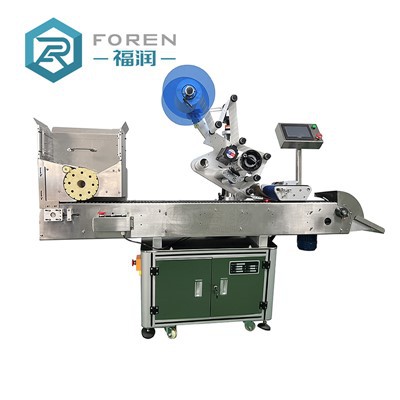
Let’s start with the basics. A mechanical labeling machine uses gears, belts, and cams to move parts into place and apply labels. Those parts have physical limits—they stretch, wear out, and can only move at specific, fixed speeds. Servo-driven systems? They use electric motors controlled by precise software, with every movement calibrated to within a fraction of a millimeter. The difference isn’t just better precision—it’s reliability. Early on, one of our small-batch food packaging clients had three old mechanical labelers that would jam at least twice a day. When we replaced one with a servo-driven model, the first thing they noticed was no more mid-shift jams. Their downtime dropped by 80% in the first month. That’s not an exaggeration—when a labeling machine jams, it doesn’t just stop working. It can ruin entire batches of product, delay shipments, and force workers to spend hours cleaning up. Servo motors eliminate most of that because they respond instantly to changes in speed or position, so even if a package shifts slightly on the conveyor, the labeler adjusts in real time instead of misapplying the label.
Precision is one advantage, but it’s not just about getting the label in the right place. For industries like pharmaceuticals or cosmetics, label accuracy isn’t just a quality control check—it’s a legal requirement. In pharma, a misaligned label can lead to incorrect dosing instructions, which puts consumers at risk and exposes manufacturers to regulatory fines. We’ve worked with several mid-sized pharma companies that switched from mechanical to servo-driven labelers and saw their label rejection rates drop from 5% to less than 0.5%. That might sound like a small number, but when you’re labeling 10,000 vials an hour, cutting rejects from 500 to 50 per hour saves you thousands of dollars in wasted materials and rework. Even for craft cosmetic brands, where product appearance is make-or-break, a perfectly aligned label makes the product look more professional. One of our clients who sells handmade skincare products told us after switching that their repeat purchases went up because customers noticed the consistent, polished look of every bottle on the shelf.
Another big advantage is changeover speed. If you’ve ever had to switch a production line from labeling 8-oz bottles to 16-oz jars, you know how much time that can take. With a mechanical machine, you have to manually adjust cams, tighten belts, and replace parts—sometimes hours of work, with the risk of misadjusting and causing issues right after the change. Servo-driven labelers? Most of our models let you program a new product setting in less than two minutes. The software stores every product’s specs—label size, bottle diameter, application angle—so when you switch, you just select the product name on the touchscreen, and the machine automatically adjusts all the servos. That’s a game-changer for businesses that run multiple SKUs on the same line. Take our craft beverage client, for example. They produce 12 different types of beer, each with different bottle sizes and label designs. Before the servo machine, a changeover would take 90 minutes. Now it takes 5 minutes. That extra 85 minutes per change adds up to 14 extra hours of production time every week—time they can use to make more product, take on extra orders, or reduce overtime costs.
Flexibility goes hand in hand with fast changeovers, and it’s something a lot of our clients don’t even realize they need until they see it. Mechanical labelers are built for one or two specific product types—they can’t handle irregular shapes like round jars, square boxes, or even curved bottles without major modifications. Servo-driven systems can be programmed to work with almost any container shape. We had a client that makes artisanal chocolate truffles, packaged in small, irregular cardboard boxes. Their old mechanical labeler would crumple labels or apply them crookedly to the lids. The servo machine adjusts the label’s position based on the shape of each box, so even with the slight variations in hand-cut packaging, every lid gets a perfectly applied label. That flexibility also helps businesses adapt to new products. If a client decides to launch a new line of products, they don’t have to invest in a whole new labeling machine—they just program the new specs into their existing servo model. That’s a huge cost saver, especially for small to medium businesses that can’t afford frequent capital investments.
Wait, but some people will tell me, “Mechanical machines are cheaper upfront. Why would I pay more for a servo-driven one?” I get that question all the time. And yes, the initial cost is higher, but when you do the math, the ROI is hard to ignore. Let’s use that same craft beverage client again. They paid $15,000 more for a servo-driven labeler than a mechanical one, but they saved $22,000 a year in downtime, rework, and overtime. They paid back the difference in less than 10 months. Another client, a large cleaning products manufacturer, had 4 mechanical labelers that required $8,000 a year in maintenance—replacing cams, belts, and gears. The servo-driven machines we sold them have almost no wear parts to replace, so their maintenance costs are under $1,000 a year. That’s $7,000 a year in savings right there, on top of the productivity gains.
I also have to talk about data, which is a big one for modern production lines. Servo-driven labelers collect data on every label application: how fast the line is running, how many labels were applied, how many rejects there were, and even any small adjustments the machine made during operation. That data lets you track performance, identify trends, and make better decisions about your production. For example, if you notice that reject rates go up when a certain bottle supplier is used, you can adjust your incoming inspection process. Or if you see that changeovers for a specific product take a little longer than average, you can tweak the programming to make it faster. Mechanical machines don’t collect that kind of data—they’re black boxes, so you never know why something went wrong, just that it did. For businesses that use automation and Industry 4.0 practices, that data integration is non-negotiable. Servo-driven labelers can connect to your line’s central control system, so you can monitor everything from a single dashboard, no more walking back and forth to the labeler to check on it.
Now, I’m not saying servo-driven labeling machines are perfect. They’re a tool, and like any tool, they work best for the right application. If you’re a small business that only produces one type of product, runs 8 hours a day, and can handle occasional mislabels, a mechanical machine might still make sense. But for most businesses that want to grow, reduce costs, and improve quality, the advantages are clear. Over the years, we’ve helped hundreds of clients make that switch, and the feedback is almost always the same: “Why didn’t I do this sooner?”
One of my favorite stories is from a startup that makes plant-based protein bars. They started with a small mechanical labeler, but as their sales grew, they were struggling to keep up with demand. Their old machine could only run 30 bars a minute, and when they added a new flavor with a longer label, it took two hours to change over. They came to us, skeptical of the initial cost, but we worked with them to run a trial. We installed a servo-driven labeler on their line, and in the first week, they were running 50 bars a minute, changeovers took 10 minutes, and rejects were almost zero. Within six months, they’d tripled their production without adding any extra shifts, and they were able to take on a big retail order they would have missed with their old machine. That’s the kind of impact servo-driven tech can have—it’s not just about a better labeler, it’s about growing your business.
I’ll be honest, when I first started with labeling machines, I was a mechanical guy. I liked the simplicity of gears and cams. But as technology advanced, I saw the limits of those old systems. The servo-driven machines we build now aren’t just about better parts—they’re about giving our clients the tools to be more efficient, more flexible, and more profitable. No more wasting materials on mislabeled products, no more lost time on long changeovers, no more stress from unplanned downtime. That’s the real advantage.
If you’re thinking about upgrading your labeling equipment, don’t just look at the price tag. Look at what your business is losing right now to downtime, rework, and inflexibility. A servo-driven labeling machine isn’t a luxury—it’s an investment that pays for itself quickly, and keeps paying for itself for years. We work with businesses of all sizes, from small startups to large Fortune 500 companies, and every one of them tells us the same thing after the switch: it changed how they run their production.
If you’re ready to learn more about how a servo-driven labeling machine could help your operations run smoother, save money, and grow, we’re here to help. We can walk you through your current challenges, show you how our equipment addresses them, and even set up a trial on your line to see the difference for yourself. Don’t let outdated labeling equipment hold your business back—let’s talk about what a servo-driven system can do for you.
EDI Equipment References:
- Manufacturing Automation Magazine. "Servo Drives: Improving Precision and Productivity in Packaging." 2022.
- Packaging Digest. "Labeling Technology Trends: The Shift to Servo-Driven Systems." 2023.
- International Society of Pharmaceutical Engineering (ISPE). "Regulatory Compliance for Labeling Equipment in Pharmaceutical Manufacturing." 2021.
- Food and Drug Administration (FDA). "Guidance for Industry: Labeling Requirements for Food and Beverage Products." 2020.
- Industry Today. "The ROI of Servo-Driven Packaging Equipment for Small to Medium Businesses." 2022.
Qingzhou Foren Water Treatment Equipment Co., Ltd.
Address: No.999 Haidai North Road, Economic development Zone, Qingzhou City, Shandong Province
E-mail: alice@forenwater.com
WebSite: https://www.forenwater.com/
