As a truck mounted crane supplier, I get asked a lot of questions by potential customers who come to us looking for lifting equipment for their construction, logistics, or infrastructure projects. But one question that comes up more than any other is this: “What makes a truck mounted crane stable enough to keep my worksite, my crew, and my materials safe?” It’s a great question—one that I don’t just answer with a quick soundbite, because stability isn’t just a buzzword. It’s the foundation of everything we design, build, and stand behind for every crane we supply. Truck Mounted Crane

Let me start with a personal story that stuck with me early in my career. Back when I was just a sales associate, not running operations for our company, I visited a worksite where a small truck mounted crane had tipped over mid-lift. No one was hurt, but the crane was totaled, and the job was delayed for two weeks while they sorted out insurance and repairs. The crew told me they’d taken a shortcut: they’d set the crane on uneven gravel instead of using outrigger pads, and they’d extended the boom further than the manual recommended because they were in a hurry. That incident drove home something I still tell my team every day: stability isn’t just about the crane itself—it’s about how it’s operated, prepared, and maintained.
First, let’s break down what truck mounted crane stability actually means. At its core, it’s the ability of the crane to resist tipping over during any stage of a lift: when the boom is extended, when loads are being swung, or when the crane is moving (though most modern truck mounted cranes don’t move with a load to keep safety standards high). Unlike tower cranes or crawler cranes, truck mounted cranes are mobile, so they have to balance two competing needs: being compact enough to drive on public roads, and stable enough to lift heavy loads safely. That balance is where a lot of the engineering work happens.
There are two main types of stability we focus on when designing our cranes: static stability and dynamic stability. Static stability is the one most people hear about—it’s the resistance to tipping when the crane is stationary, in a no-wind environment, lifting a load at its rated capacity. This is calculated using something called the tipping load: the maximum weight the crane can lift before its center of gravity shifts past the tipping point (that’s the imaginary line between the two front outriggers or, on some smaller cranes, the rear of the truck chassis). For static stability, every part of the crane plays a role: the outriggers, which extend sideways and down to distribute weight across a wider footprint; the counterweights, which sit on the rear of the chassis to offset the load’s weight on the boom; and even the truck’s own frame, which has to be reinforced to handle the forces of a heavy lift.
Dynamic stability is a bit less talked about, but it’s just as important—especially for worksites that have variable conditions like wind, uneven ground, or swinging loads. Dynamic stability accounts for things like wind load on the boom and the load itself, the momentum when swinging a load, and even the movement of the truck’s chassis if it’s not perfectly level. A few years ago, we upgraded our line of 10-ton truck mounted cranes specifically to improve dynamic stability for worksites in coastal areas, where wind speeds can spike suddenly. We added a wind speed sensor that alerts the operator if wind exceeds the crane’s rated limit, and we adjusted the outrigger synchronization to make sure both left and right outriggers extend at the same rate, even if one side hits softer ground. That upgrade cut our customers’ incident reports related to wind-related instability by almost 70% in the first year we rolled it out, which is something we’re really proud of.
Now, stability isn’t just engineering—it’s also about how you prepare the crane for a lift, which is something every operator has to understand. I see this all the time when I train new operators on the cranes we supply: the step that’s most often rushed is outrigger setup. You can have the most stable crane on the market, but if you set the outriggers directly on soft dirt or grass without a pad, that stability goes out the window. Soft ground causes the outriggers to sink, which tilts the crane, shifting its center of gravity. That’s why we always include heavy-duty outrigger pads with every crane we sell, and we emphasize in our training that operators have to do a walkaround of the worksite before setting up: check for soft spots, fill in any holes, make sure the ground is level. Even a 2-degree tilt can reduce a crane’s rated capacity by 10% or more, which sounds small, but when you’re lifting a 5,000-pound load, that’s 500 pounds you can’t afford to lose.
Another common mistake we see is operators ignoring the crane’s load chart. Every truck mounted crane has a load chart that’s specific to its model, boom length, and operating radius (that’s the distance from the center of the crane’s rotation to the load). For example, a 12-ton crane might be able to lift 12 tons when the boom is fully retracted and the radius is small, but if you extend the boom to 50 feet and lift at a 20-foot radius, that same crane’s maximum load drops to 4 tons. We’ve had customers come to us after an incident, saying “the crane was rated for 12 tons, so why did it tip?” because they didn’t check the load chart for the exact conditions of their lift. That’s why we make load charts easy to access—we mount them right inside the operator’s cab, and we include digital versions on every crane’s control panel so operators can pull them up in seconds. For our commercial customers, we also offer custom training sessions where we walk operators through how to read load charts and adjust for site conditions, which is a service most of our competitors don’t offer.
We also test every crane we build for stability, way beyond what industry standards require. The ISO 15514 standard for truck mounted cranes sets minimum stability requirements, but we add our own internal tests. For example, we do a “worst-case” test where we set the crane on a slope of 5 degrees (steeper than most worksites will ever have) and lift a load 10% over the rated capacity to make sure it doesn’t tip. We also test how the crane performs when one outrigger is set on a slightly softer surface, to simulate a site where the ground isn’t perfectly uniform. A few months ago, we had a customer use one of our cranes to lift steel beams for a bridge repair, and the site had an area where the ground had settled after recent rain. The operator used a longer outrigger pad on that side, checked the load chart, and lifted the beams without any issues. That’s exactly what we design for.
Maintenance also plays a huge role in stability, and it’s something customers often overlook. Over time, parts of the crane that affect stability can wear out: the outrigger hydraulic hoses, which can lose pressure and cause the outriggers to retract unevenly; the counterweight mount, which can loosen if not tightened regularly; and the truck’s chassis, which can develop stress cracks from heavy lifts. That’s why we recommend a full stability inspection every 1,000 hours of operation, or at least once a year, and we offer a maintenance plan for our customers that includes those inspections. Last year, we caught a worn outrigger valve on a customer’s crane before it failed—if it had failed mid-lift, the crane could have tipped. That’s the kind of proactive support we provide that makes our cranes stand out.
I know that when you’re choosing a truck mounted crane, you’re not just buying a piece of equipment—you’re buying the safety of your crew, the timeliness of your projects, and the peace of mind that nothing will go wrong. That’s why stability isn’t an afterthought for us; it’s the first thing we design into every crane. We don’t cut corners on materials, on engineering, or on training because we’ve seen what happens when you do.
If you’re in the market for a truck mounted crane, or you have questions about stability, load capacity, or worksite preparation, I’d encourage you to reach out. We work with construction companies, logistics firms, and municipal projects to supply cranes that fit their specific needs, and we’re always happy to walk you through the details of how our cranes are built for stability. Whether you’re lifting materials for a residential build, moving equipment at a warehouse, or working on a large infrastructure project, we can help you find the right crane that keeps your team safe and your operations running smoothly.
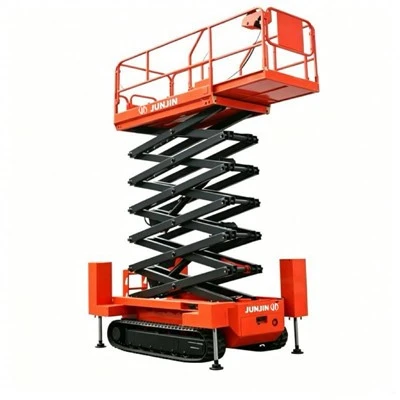
Used Scissor Lift References
- International Organization for Standardization. (2019). Cranes — Safety — Part 5: Mobile cranes. ISO 15514:2019.
- American National Standards Institute. (2021). Safety Standards for Truck-Mounted Cranes. ANSI B30.5:2021.
- Machine Design. (2022). “The Science of Crane Stability: Beyond Tipping Load Calculations.”
- Occupational Safety and Health Administration. (2023). Crane Safety Guidelines for Mobile Lifting Equipment. OSHA 3153.
Yantai Quanrui International Trading Co., Ltd.
As one of the most reliable truck mounted crane manufacturers and suppliers in China, we’re featured by high quality customized products. Please rest assured to buy discount truck mounted crane made in China here from our factory. Contact us for pricelist and quotation.
Address: No. 278, Sanya Road, Gaotuan Town, Fushan District, Yantai City, Shandong Province, China
E-mail: Info@quanjin1588.com
WebSite: https://www.qr1588.com/
