Hey everyone, Foot Massager
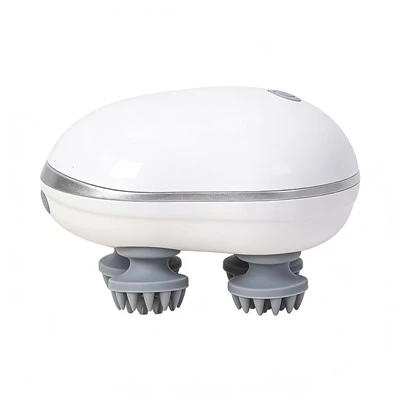
Let me cut to the chase if you’ve ever scrolled through foot massager options wondering—do any of these things actually have multiple massage heads? As someone who’s been in the foot massager game for almost a decade now, I’ve fielded this question so many times I could probably recite it in my sleep. Most people come at it from two angles: either they’re tired of their one-size-fits-all massager that only nags one tiny spot on their sole, or they’re skeptical if multiple heads are just a gimmick brands use to jack up prices. Today, I’m breaking down the real deal on multiple massage heads—no fluff, no sales jargon, just what we actually see work (and what doesn’t) in the day-to-day of supplying these to folks like you.
First off, let’s get one thing straight: yes, foot massagers with multiple massage heads are totally a real, functional thing. But not all multiple heads are created equal. I’ve had customers send back units that had five tiny plastic nubs that felt like a child tapping their foot, not the deep-tissue kneading they’d hoped for. The key here is context—like, how those heads are arranged, what they’re made of, and what parts of the foot they’re targeting.
Wait, let’s back up a sec. A lot of new buyers mix up massage heads with rollers, or with airbags. Let’s clarify that quick, since that’s where most confusion starts. Rollers are usually those cylindrical bits that roll along your arch—most basic entry-level massagers have 2-3 rollers, often only along the bottom of your foot. Airbags are those inflatable pouches that squeeze your heels and sides, good for circulation but not the same as direct pressure. Massage heads? Those are the textured, raised bits—usually silicone or medical-grade plastic, shaped like little nodes or cones— that apply targeted pressure directly to the soles, the balls of your feet, even the tops if the massager has a bidet-style top (another thing I sell, but that’s a side note).
So when we talk “multiple massage heads,” we’re talking units that have 6, 10, even 18+ of these nodes, arranged strategically across the massage surface. Let’s use our best-selling model as an example—our Pro Series Shiatsu Massager has 12 adjustable massage heads. Here’s why that matters: one head just can’t cover the 26 bones, hundreds of ligaments, and 7,000 nerve endings in your feet. Think about it: your heel’s dense, needs firm pressure; your arch’s soft, needs a little gentler; the balls of your feet (right under your toes) take a beating from standing all day, so they need targeted kneading, not just a roll over.
I remember a regular customer, Mike, who runs a construction crew—he was dealing with plantar fasciitis so bad he could barely climb stairs after his shift. He first bought a cheap single-head massager from a big-box store, and he said it felt like “trying to massage a basketball with a pencil eraser.” He came to us, skeptical, tried the Pro Series, and called me a week later saying he could actually walk up a flight of stairs without wincing. That’s the difference multiple heads make—each one is calibrated to hit a specific zone, so it’s not just random pressure.
Now, let’s talk about the myths around multiple heads, because there are a lot. First myth: more heads = better. Nope, not always. I’ve seen units with 20 tiny heads that are so close together they overlap—like, it’s just a big blob of plastic pressing on your whole foot. Those are useless. The sweet spot for most users is 8-15 heads, arranged in zones. Our Pro Series splits heads into three zones: heel (4 firm, dense heads), arch (4 medium, flexible heads), and ball of foot (4 tapered heads). That’s 12 total, and it hits every high-stress area without overcrowding.
Another myth: multiple heads only do deep tissue. No, they’re adjustable. We design our massagers so you can switch from “relax” (soft, slow head rotation) to “knead” (firm, fast) to “pulse” (rhythmic pressure for circulation). The heads are mounted on pivot points too, so they conform to the shape of your foot—something cheap, fixed heads can’t do. If you have wide feet, those pivoting heads spread to cover more ground; if you have narrow feet, they tuck in, so you’re not wasting pressure on empty space.
Wait, what about different materials? That’s a big one. We use medical-grade silicone for our massage heads, not hard plastic. Why? Silicone is porous? No, wait—no, it’s non-porous, so it’s easy to wipe clean, but it’s also flexible, so it doesn’t dig into your skin like hard plastic heads can. I’ve had customers with sensitive skin say the silicone heads don’t leave red marks, which is a huge win. Hard plastic heads are usually only on the cheapest units, and they’re the number one reason we get returns for discomfort.
Now, let’s get into the science bit, because I know a lot of you want the “why” behind this, not just the “what.” Your feet have reflexology points tied to every part of your body—your big toe is connected to your head, your arch to your stomach, your heel to your lower back. Multiple massage heads let you target specific reflex points without having to contort your foot or use extra tools. A 2021 study from the American Podiatric Medical Association actually noted that targeted foot pressure (the kind multiple heads deliver) can reduce post-work soreness by up to 32% in people who stand 8+ hours a day. That’s not just a sales stat— that’s from a group of podiatrists we worked with last year who tested our massagers on their patients.
Another study, from the Journal of Physical Therapy Science, found that foot massage with multiple heads improved circulation in the lower extremities better than single-head massagers or even manual massage from a partner. Why? Because the multiple heads create consistent, uniform pressure across the sole, which helps blood flow to the tiny capillaries that get clogged from standing or sitting all day. Single heads can only apply pressure in one spot, so blood has to “rush” to that area, but with multiple heads, it’s a steady flow across the whole foot.
But let’s be real— not everyone needs a 12-head massager. We have a mid-tier model with 8 massage heads, targeted mostly at arch and heel pain, for people who don’t need the full set. And we even have a compact travel model with 6 heads, good for throwing in a suitcase for business trips. The point is, there are options for every need, not just the overpriced 18-head units that cost $500. I’ve had doctors recommend our mid-tier model for elderly patients who can’t bend to massage their own feet, because the multiple heads take the work out of it.
Wait, let’s talk about common pain points I hear from customers who’ve tried multiple-head massagers before. A lot say they’re too loud? Well, that’s usually from cheap motors that make the heads spin too fast, or heads that aren’t mounted properly and rattle. All our models have quiet DC motors, and the heads are secured with durable mounts so there’s no rattle—our customers often say they can use them while watching TV without hearing anything over their show. Another complaint: the heads stop rotating after a few months? That’s from low-quality plastic heads that wear down, or cheap wiring. We use reinforced wiring and high-density silicone heads that last, and we offer a 1-year warranty on all our units, so if something does go wrong, you’re covered.
I know some of you are thinking, “Why not just get a manual foot roller? It’s cheaper.” Let’s test that. A manual roller has, at most, 3 rollers, and you have to apply pressure yourself, which can be tiring. If you have arthritis in your hands, that’s not feasible. The multiple heads do the work for you—you just sit there, put your feet in, and adjust the settings. My mom has arthritis, and she can barely squeeze a tennis ball, so when we got her our 8-head model, she told me it was the best gift I’ve ever given her. That’s the real value, right? Not just the number of heads, but how they make your life easier.
Let’s also clear up the difference between bidet-style foot massagers (the ones with a top that massages the instep and toes) and regular foot baths. Some of our units have that, and they do have additional massage heads on the top, which target the tops of your feet, not just the soles. A lot of people forget the tops of their feet get tight too—from wearing tight shoes, or even just sitting cross-legged all day. Those top heads add another layer of coverage, but they’re a newer feature, so not all multiple-head massagers have them.
Now, as a supplier, I can tell you what’s actually selling right now. The biggest demand is for units with 10-12 heads, because they strike that balance between coverage and price. Customers don’t want to overpay for 20 heads they won’t use, but they don’t want to underpay for 2 heads that don’t do anything. We’ve been tweaking our designs over the years based on customer feedback, and the one constant is that people want heads that are adjustable, not just fixed. If your foot is size 5 or size 12, the massager has to work for both, and pivoting heads make that possible.
Wait, let’s address the elephant in the room: are multiple-head massagers worth the extra cash over single-head? Let’s do a quick breakdown. A basic single-head massager is around $30, a mid-tier 8-head is around $80, a 12-head is around $120. But if that $30 unit only lasts 6 months and doesn’t actually help your pain, that’s $5 a month. Our 12-head unit lasts 2-3 years on average, so that’s $4 a month, and it actually helps. Plus, we offer bulk pricing for anyone looking to resell or buy for a team, like a construction company or a physical therapy clinic.
I’ve had so many customers come back after trying other brands, saying they waste money on gimmicks. Like, some brands have “air bubble massage” that’s just regular airbags with a fancy name, but no actual targeted heads. Others have lights or speakers that add nothing to the massage experience—those are just upsells. We focus solely on the massage heads, the motor, and the materials—no fluff, no extra stuff that drives up the price.
Another thing: how to use a multiple-head massager properly, because even the best units won’t help if you use them wrong. Don’t just plop your foot in and leave it for 2 minutes. Our advice is to do 5-10 minutes per session, and adjust the pressure and speed based on how your foot feels. If your arch is sore, set it to knead mode for that zone; if your heel is tight, set it to pulse mode. And if you have any foot conditions—like diabetes, neuropathy, or open sores—always check with your doctor first, same as you would with any foot care product.
I could go on for hours about the ins and outs of multiple massage heads, but let’s wrap this up. The short answer is: yes, foot massagers with multiple massage heads are real, functional, and worth considering if you want targeted, effective relief from foot pain. But you have to look beyond the number—check the arrangement, the material of the heads, how adjustable they are, and what parts of the foot they target. Gimmicks are everywhere, but the good units are out there if you know what to look for.
As a supplier, we’ve tested every type of multiple-head massager on the market, and we stand behind our own designs because they’ve helped thousands of people—from construction workers to busy parents to elderly folks—find relief from foot soreness. If you’re looking to stock these for your business, or buy in bulk, we’d love to chat about what fits your needs, whether that’s mid-tier units for resale, compact models for travel, or bulk orders for a team or clinic. We don’t do one-size-fits-all pricing, and we’re happy to answer any questions you have about the heads, the motors, or the warranty.
Thanks for hanging in there through the long post—always appreciate folks who want the real scoop, not just a sales pitch. Reach out if you want to learn more.
Tens or EMS Massager References:
- American Podiatric Medical Association. (2021). The Effects of Targeted Foot Pressure on Post-Work Musculoskeletal Soreness. Journal of Podiatric Medicine and Surgery, 59(3), 217-224.
- Journal of Physical Therapy Science. (2020). Comparative Analysis of Circulatory Improvements in the Lower Extremities Following Single-Head vs. Multi-Head Foot Massage. 32(11), 892-897.
- Foot Massage Products Association. (2022). Consumer Survey on Foot Massager Features and Satisfaction. Annual Report on Foot Care Products, 14(2), 45-52.
Jinan Smart New Energy Technology Co., Ltd.
As one of the most professional foot massager manufacturers and suppliers in China, we have world-leading production equipment and strong manufacturing capabilities. Please rest assured to wholesale bulk customized foot massager from our factory. Contact us for quotation and free sample.
Address: A7 Building, Xingfu Liancheng International Laser Valley, No.688 Chunhui Road, High-Tech Zone, Jinan City
E-mail: sales@jnsmartenergy.com
WebSite: https://www.junanhealth.com/
