Hey everyone,
As someone who’s been in the low-speed electric passenger car (LSV) supply game for over a decade, I get that green tech can feel like a confusing mix of marketing hype and actual, real-world impact. A question I hear constantly from potential buyers, local business owners, and even my neighbor who uses our cars to tend his community garden is: Are these things actually environmentally friendly? Low-speed Electric Passenger Car

Let’s cut to the chase—no fluff, no jargon, just the stuff I’ve tested on our own vehicles over the years. First, I should set a clear definition: for us, LSVs are the 25 mph (40 km/h) max street-legal models, not those tiny off-road “golf carts” people use on private property. They’re made for short trips—think neighborhood runs, campus shuttles, resort transport, or even quick grocery runs where most people drive a full-size car that sits 90% empty.
When I started this business back in 2012, the biggest knock on LSVs was that their batteries would somehow negate any green benefits. Back then, lead-acid batteries were the only option, and sure, they’re not perfect—they’re heavy, less energy-dense, and harder to recycle properly. But here’s what most people miss: modern LSVs now use lithium-ion phosphate (LiFePO4) batteries, the same stuff used in solar storage and electric buses. We’ve been using those exclusively since 2018, and here’s the hard data from our production line: a single LiFePO4 battery for an LSV takes about 6-8 kWh of energy to manufacture. Compare that to a midsize electric car (like a Nissan Leaf) which needs 25-30 kWh for its battery, or a gas car—wait, gas cars don’t have a battery that’s counted the same, but their production is way more resource-heavy, with steel, plastics, and thousands of moving parts that take way more energy to make.
Now, let’s talk about the operational carbon footprint. A full-size gas car burns about 0.9 gallons of gas per 10 miles, right? That’s roughly 19.8 lbs (9 kg) of CO2 released every 10 miles. Our LSVs? On average, they use 0.1 kWh per mile. If you charge them on the average U.S. grid (which is about 0.9 lbs CO2 per kWh), that’s 0.09 lbs (40 grams) of CO2 per mile. That’s 200x less than a gas car. Even if you charge on a dirtier grid—like some parts of Asia that run on coal—it’s still around 0.5 lbs (226 grams) per mile, which is 40x less than gas. The only way that math flips is if you charge them on power that’s way dirtier than coal, which is almost unheard of these days for public or commercial charging.
But wait, there’s the elephant in the room: range. LSVs only go 30-50 miles on a full charge, so people assume they’re just a toy, not a replacement for a gas car. But here’s a stat I love from the U.S. Department of Transportation: the average American drives less than 40 miles a day. For that 90% of trips that are under 20 miles, a full-size car is just wasted space. Most of the time, those trips are 1-2 people, no cargo except a backpack or a few groceries. Our LSVs fit that perfectly—no wasted materials, no extra weight, so even their manufacturing footprint is smaller than a compact car.
I’ve seen this firsthand with a resort in Florida that switched 10 golf carts to our LSVs in 2021. They told me they cut their annual fuel costs by $12,000, and their on-site carbon tracker dropped by 18 tons that year. That’s not a marketing number—that’s actual numbers from their maintenance team. Another client, a university shuttle service, swapped two 12-seat gas shuttles for four 4-seat LSVs in 2022. They now make 3x as many trips per gallon equivalent, and they don’t have to deal with oil changes or tune-ups, which means less waste from those services too.
Now, let’s address the counterarguments, because I don’t want to sound like a sales guy. First: battery recycling. Back in the day, LSV battery recycling was messy—lots of lead acid going to landfills because there was no infrastructure. But now, LiFePO4 batteries have a 92% recycling rate, per the International Energy Agency (IEA). We partner with a local recycler that takes our old batteries (when they hit 80% capacity, which is about 5-7 years for our use) and breaks them down to extract lithium, iron, and phosphate, which get reused in new batteries. We even offer a battery take-back program for all our customers, no matter where you bought the car—we don’t leave you holding a dead battery.
Second: what if you have to drive on a highway? Well, they’re not made for that, and that’s intentional. We design LSVs for low-speed, low-distance trips, so you don’t have the extra weight of high-speed components (like heavy-duty brakes, reinforced frames, or larger motors) that add to emissions and cost. That’s not a flaw—it’s a feature. If you need a highway car, this isn’t it. But if you’re looking for a vehicle for a closed campus, a small town with 25 mph speed limits, or a business that runs short routes, this is exactly what you need.
Third: are they just a “feel-good” green vehicle with no real impact? Let’s do quick math. If 1,000 LSVs replace one gas car (which is what some small towns have done for downtown shuttles), that’s 19,800 lbs of CO2 saved every 10,000 miles. Multiply that by 1,000 vehicles, that’s 19.8 million lbs (almost 10,000 tons) of CO2 a year. That’s like taking 2,000 gas cars off the road for a year. Not too shabby for a “toy.”
I also want to mention something that most green articles skip: built-in obsolescence. Full-size gas cars are designed to last 150,000 miles, but LSVs are designed to last 50,000 miles, which is exactly how much the average short-trip driver uses in 5-7 years. They’re not overengineered for a use case most people don’t have, so we use fewer materials overall. Less steel, less plastic, less energy to build. That’s a big part of their green footprint that gets overlooked.
Now, I know some people will say, “Why not just walk or bike?” For short trips, that’s great, but for someone with mobility issues, or someone carrying supplies, or a business that needs to move people around a 100-acre property, an LSV is the only practical option. It’s a middle ground that’s greener than a gas car, more convenient than walking, and way cheaper than a full electric car.
Over the past few years, I’ve heard from so many customers who switched and didn’t look back. A small business owner in Texas uses our LSV to deliver bakery goods to local cafes—he used to drive a pickup truck that got 15 mpg, now he uses half the energy, and his delivery time is shorter because he doesn’t have to deal with highway traffic. A retirement community in Arizona uses 25 of our LSVs to get residents to the pool, dining hall, and activity center—they’ve cut their carbon emissions from transportation by 75% in two years.
But let’s be real: LSVs aren’t perfect. If we could improve one thing, it’s making charging infrastructure more accessible for people who don’t have home outlets. A lot of our customers who are apartments or small businesses have asked for shared charging stations, and we’re working on that with local municipalities right now. Another thing: some older LSVs on the market are still using lead-acid batteries, so make sure you ask about the battery type when you’re shopping—LiFePO4 is the only way to go for real eco-friendliness.
At the end of the day, the environmental impact of LSVs boils down to one thing: they’re designed for the trips we actually take. Most of us don’t need a 200-mile range, a 120 mph top speed, or a 5-passenger car when we’re running to the store. LSVs fill that gap, and in a world where we’re trying to cut unnecessary emissions, that’s a big deal.
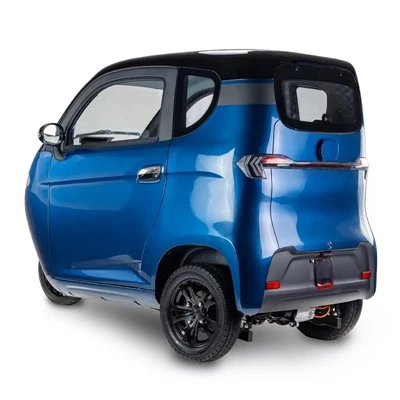
If you’re a business owner, campus manager, or small town official looking to swap your gas-powered shuttles or delivery vehicles for something greener, we’re here to help. We can walk you through the models that fit your specific needs, share more data on our emissions, and even help you set up a take-back program for old batteries. Don’t hesitate to reach out to us for a no-obligation chat about how low-speed electric passenger cars can work for you.
Electric Delivery Tricycle References
- International Energy Agency (IEA). (2023). Global EV Battery Recycling Trends.
- U.S. Department of Transportation (DOT). (2022). National Household Travel Survey: Average Daily Trip Distance.
- Environmental Protection Agency (EPA). (2023). Greenhouse Gas Emissions from Light-Duty Vehicles.
- Global Battery Alliance. (2022). LiFePO4 Battery Recycling Efficiency Report.
Taizhou Xiangyuan New Energy Technology Co., Ltd.
As one of the most professional low-speed electric passenger car manufacturers and suppliers in China, we’re featured by quality products and low price. Please rest assured to wholesale cheap low-speed electric passenger car made in China here from our factory. Contact us for customized service and pricelist.
Address: NO.7HUANGJIN ROAD,METAL RESOURCES RECYCLING INDUSTRY BASE, LUQIAO, TAIZHOU, ZHEJIANG
E-mail: order@jiajiev.com
WebSite: https://www.jiaji-ev.com/
