If you’ve been in the sign and graphic printing game for even a minute, you’ve probably stumbled across eco solvent printers—they’re the workhorses that handle everything from vinyl banners to vehicle wraps with that satisfying matte (or sometimes glossy) finish that sticks around. But here’s a question I get at least twice a week from clients, both new and seasoned: “Can I run glass through my eco solvent printer?” And before you roll your eyes (or send me a meme of a printer smoking next to a shattered window), let’s cut the crap: the answer isn’t a flat yes or no. It’s nuanced, it’s got a few tricks, and it’s actually one of the most underrated use cases for these machines if you do it right. Eco Solvent Printer
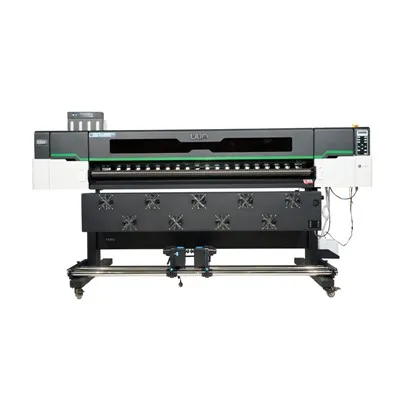
First, let’s ground this in what eco solvent inks and printers actually are, because there’s a lot of misinfo out there that blurs lines with solvent printers, latex printers, and that old-school stuff that smells like paint thinner. For anyone who’s new: eco solvent printers use inks with volatile organic compounds (VOCs) that are way lower than traditional solvent inks—hence the “eco” part. They dry by absorbing into the substrate and then curing with a little heat or air, so they stick without needing a separate laminate (though sometimes people add that for extra durability). The key here is that these inks aren’t just for flexible media like vinyl. They work on rigid substrates too, right? Plastic, wood, metal, even glass—if the prep work and ink type are matched correctly.
Wait, but why do people think you can’t print on glass with these? I’ve heard horror stories: clients tried a quick test on a scrap window, ran it through their printer, and by the next afternoon the ink was smearing when they touched it, or peeling off in big chunks when they wiped it with glass cleaner. That’s not the printer’s fault. That’s skipping the single most important step for glass: surface preparation. Glass is non-porous, smooth, and coated with a lot of that factory-release agent you can’t see, which is why so many adhesives and inks slide right off. I’ve had a customer come to me last month who bought a cheap no-name eco solvent printer, tried printing on store-bought glass, and ended up throwing $200 worth of ink and a dozen panes in the trash. He didn’t wipe the glass with isopropyl alcohol first. Duh.
So let’s break down the real deal step by step, like I’d walk a new client through it. First, substrate choice. Not all glass is equal. If you’re printing for indoor use—like a café window decal or a decorative shelf insert—standard float glass works fine. For outdoor use, like a storefront sign exposed to rain and UV, you need tempered glass, not regular. Tempered is thicker, more durable, and doesn’t shatter into sharp bits if it breaks, which is a safety win, but it also has a slightly rougher surface that helps ink adhere better. Also, skip frosted glass for full-color prints unless you’re okay with a faded, grainy look—clear or low-iron glass gives the truest colors.
Next, the make-or-break prep. Here’s my exact routine I teach every customer who asks to test glass: grab a lint-free microfiber cloth (paper towels leave fuzz, trust me) and 91% isopropyl alcohol—any lower and it doesn’t cut that release agent. Wipe the glass in a circular motion, front to back, then do a second wipe with a dry cloth to get every last trace of alcohol. Don’t touch the cleaned surface with your bare hands after that—oil from your skin will mess things up. Some people use a glass etchant spray, but that’s overkill for most small jobs. Isopropyl alcohol works for 90% of use cases, and it’s cheap.
Then, ink selection. Not all eco solvent inks are created equal for glass. We carry a line of specialized eco solvent inks called “hard inks” (no, not the ones you think—hard ink formula) that are designed to bind to non-porous surfaces like glass. Regular eco inks work on vinyl, but they’re softer, so they rub off smooth glass. Our hard inks have a cross-linking agent that actually reacts with the glass surface once it cures, so it’s not just sitting on top—it’s bonded. If you use regular inks, you’ll get peeling. If you use our hard inks, and do the prep, you’ll get prints that don’t smear when you wash the glass. I’ve seen a test print we did last year that’s been sitting on an outdoor storefront window for 18 months—still crisp, no fading, no peeling. The customer used our prep guide, so that’s why.
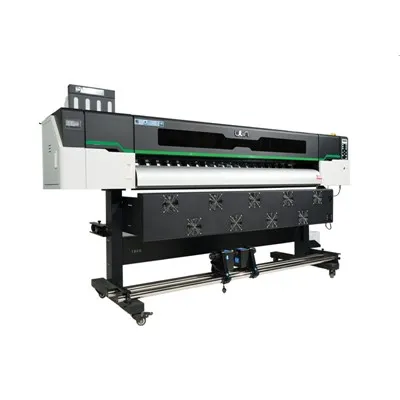
Now, the printer itself. Can you use your existing eco solvent printer, even if it’s not a wide-format workhorse? Most of the time, yes—but you need a way to hold the glass steady during printing, because glass is rigid and can’t roll like vinyl. A lot of people rig up a custom jig with cardboard or painter’s tape to hold the glass in the printer’s carriage, but the issue is that most entry-level eco solvent printers are designed for flexible media, so if the glass is even a tiny bit warped, it can jam the print head. If you’re doing a lot of glass printing, springing for a mid-range or wide-format eco solvent printer with a rigid media tray is worth it. Those trays hold the glass flat, so the head stays at the correct distance (usually 1-2mm, depending on the printer) and the print is aligned. We’ve got a few models that handle up to 4×8 foot glass, which is perfect for storefront signs.
Wait, what about curing? Eco solvent inks need to cure fully to set, and glass is cold, so that can slow things down. For small indoor prints, let the glass sit at room temperature for 24 hours after printing—no touching it, no moving it. For outdoor or large prints, use the printer’s built-in curing fan, or a small heat gun set to low (no more than 150°F, you don’t want to crack the glass) to speed it up. If you rush curing, the ink will smudge. I once had a customer who tried to stack his freshly printed glass panes within an hour—ended up with half the prints ruined because the ink transferred between them. Lesson learned.
Now, the limitations, because I’m not gonna sugarcoat this. Eco solvent prints on glass aren’t permanent—they’ll fade after 3-5 years outdoors, even with the best prep and inks. That’s way better than some other methods, like window clings that peel after a month, but it’s not the same as a glass etching that lasts forever. Also, if you print on the inside of the glass (which is trickier, because you have to reverse the design), it will look slightly dimmer than printing on the outside. And if you need to print on curved glass—like a wine bottle or a cylindrical store sign—you’ll need a roll-fed eco solvent printer, not a flatbed, because the roll feed can bend around curved surfaces. Most flatbed printers can only handle flat glass.
But here’s the fun part: the uses. People are sleeping on glass printing with eco solvent printers. Cafés use it for custom menu decals that stay up for months. Gyms print motivational quotes on glass wall panels that don’t get smudged when people lean on them. Event planners make custom glass table numbers and backdrop panels that are lightweight and durable. Even car dealerships use it for temporary glass ads on showroom windows that they can pull and replace easily. It’s way cheaper than sandblasting or vinyl wraps for short-term, high-impact projects.
I’ve had a customer who runs a boutique hotel that does rotating art displays. She used to hire a local sign company to do custom prints on glass, costing her $500 a panel. Then she bought one of our entry-level eco solvent printers, learned the prep trick, and now does her own prints for $50 a panel. She turns over 10 panels a month, so that’s $4500 a year in savings. That’s the kind of win I live for as a supplier—helping small businesses cut costs and do more of their own work.
Another common question: is this safe? A lot of clients ask about VOCs, since eco solvent inks are supposed to be low-VOC, but they still emit some fumes while printing and curing. If you’re printing glass indoors, make sure you have good ventilation—open a window, or use a fume extractor. Our inks meet EPA standards, so they’re way safer than old solvent inks, but you don’t want to be breathing them in an enclosed space all day. That’s non-negotiable, no matter what printer or ink you use.
Let’s circle back to that initial question: can an eco solvent printer be used for printing on glass? The short answer: yes, but only if you do it right. Skip the prep, use the wrong ink, or jam the glass incorrectly and you’ll end up with a mess. Follow the steps—clean the glass, use the right hard eco inks, hold it steady, cure properly—and you’ll get prints that are crisp, durable, and way cheaper than other methods.
If you’re curious about testing this, we offer free test kits with our hard eco inks and a prep guide, so you don’t have to waste your own materials. We’ve been in the eco solvent printer game for over a decade, and we’ve helped hundreds of customers make glass printing work for their businesses. Whether you’re a one-person shop looking to add glass signage to your offerings, or a mid-sized company wanting to cut costs on in-house displays, we’ve got printers and inks tailored to your needs.
If you’re ready to talk through your specific project—whether it’s a small batch of cafe decals, large storefront signs, or something in between—reach out to our team to schedule a demo and get all your questions answered. No pressure, just real info about how to make your printing work better for you.
DTF Printer References
- "Eco-Solvent Ink Performance on Non-Porous Substrates," Printing Impressions, 2022
- "Surface Preparation for Adhesion to Glass," ASTM International, 2021
- "UV and Weather Durability of Eco-Solvent Printed Glass," Journal of Graphic Arts Technology, 2023
- "Safe Operation of Eco-Solvent Printers in Indoor Environments," Occupational Safety and Health Administration (OSHA), 2020
Hangzhou Yulan Technology Co., Ltd.
Hangzhou Yulan Technology Co., Ltd. is one of the most professional eco solvent printer manufacturers and suppliers in China. With abundant experience, we warmly welcome you to wholesale the newest eco solvent printer in stock here from our factory. Good service and quality products are available.
Address: Building, No.128 Rihui Road, Linping District, Hangzhou, China.
E-mail: ulinprint@gmail.com
WebSite: https://www.ulinprinter.com/
