Hey everyone, it’s Jake from your go-to E-city bike frame supplier. Lately, I’ve been getting hit up DMs, emails, even random Instagram comments from riders and small bike shop owners alike, all asking the same question: “How much does an E-city bike frame actually cost?” Full disclosure—this isn’t a one-size-fits-all number, and I’m not gonna give you some generic, vague figure that doesn’t account for real stuff like materials, design, minimum orders, and how the industry’s been flipping out over raw materials lately. Let’s break this down like we’re chatting over a coffee (no boring spreadsheets, promise). E-city Bike Frame

First off, let’s get one thing straight: E-city bikes aren’t your old clunky commuter bikes. They’re the ones you see zipping through Brooklyn’s bike lanes, rolling up to coffee shops in Austin, or hauling groceries in Portland—they’re a mix of lightweight, durable, and built to handle e-bike parts like the motor, battery, and those extra miles that come with electric commuting. So their frames aren’t just regular bike frames with a motor slot cut in. That’s a whole separate design process.
Now, when someone asks for a price, I usually start by asking two big questions: What material do you want, and how many do you need? Those two things are 90% of the cost, full stop. Let’s start with materials, because that’s where most people get tripped up. The two most common materials for E-city frames are aluminum and carbon fiber—no, steel isn’t really a thing here unless someone’s making a super custom vintage-style build, which is rare for mass production.
Aluminum is the workhorse, the bread and butter, the go-to for most riders and shop owners because it’s affordable, super tough, and easy to work with. For a mid-range aluminum E-city frame—think the kind that fits a 250W to 500W hub or mid-drive motor, with mounts for a battery, fenders, racks, all that stuff—the price point is usually between $350 and $800 per frame, right? Wait, hold on, that’s for a small order? No, wait—wait, no, let’s clarify: that’s per frame when you’re ordering 100 or more. If you’re a weekend warrior making one custom build? That’s way higher, like $1,200 to $2,000, because custom machining one frame is a total waste of time and money for factories. But we’re talking about actual small bike shops or mid-sized brands that are looking to stock 50+ frames, not just make one for their mate.
Now carbon fiber. Oh boy, carbon is where things get wild. It’s lighter than aluminum (super important for riders who hate carrying their bike up apartment stairs), absorbs road vibration way better, and looks sleek as hell. But it’s more complex to manufacture, especially for E-city frames because you have to integrate the motor and battery mounts perfectly, no warping, no weak spots. A mid-range carbon E-city frame for that same 100+ unit order? That’s between $800 and $1,800 per frame. If you go high-end carbon—like the ones with extra internal routing for wires, reinforced dropouts for heavy motors, or custom paint finishes? That can jump to $2,000 or more per frame. But let’s be real, most folks don’t need that unless they’re making premium $3,000+ E-city bikes.
Wait, but what else adds to the cost? Let’s talk about the little stuff that no one thinks about, because that’s where hidden fees sneak in. First, motor compatibility. Some E-city frames are built specifically for Bosch, Shimano Steps, or Brose motors—those are the big names, and if you’re making a frame that’s tailored to their exact specs, you pay a tiny premium because you have to use their approved mounting fixtures. If you want a universal frame that works with any mid-drive or hub motor? That’s cheaper, no special design hoops. Then there’s battery integration—do you want a downtube battery, integrated into the top tube, or a rear rack battery? Integrated is sleeker, but it means more internal molding, which adds cost. If you’re running a rear rack battery, that’s simpler, so a bit cheaper.
Then there’s minimum order quantities (MOQs). This is the big one that trips up a lot of new brands or small shop owners who are just starting out. Most factories won’t sell you 1 frame, obviously—they need to set up their molds, line up their workers, so MOQs are usually 50 to 200 frames for a standard aluminum E-city frame. If you’re ordering less than that, like 10 or 20, the per-frame price can jump by 20% to 50% because the factory has to charge you for the time they’d normally spend on a big run. For carbon frames, MOQs are usually higher too, like 30 to 100, because the molds are way more expensive to make upfront.
Wait, let’s throw in some real-world examples to make this concrete. Last year, a small bike shop in Chicago hit me up. They wanted aluminum E-city frames for their in-house brand, targeting casual commuters who ride 5 miles to work every day. They ordered 150 frames, all standard, with downtube battery mounts and rack/ fender mounts. The total cost per frame was $420, all in. No custom paint, no special motor, just straight up what we make most of our frames for. They sold each complete bike for $1,200, so they made a solid profit. Then there was a custom brand from LA that wanted carbon frames, with integrated top tube batteries and custom matte black paint. They ordered 50 frames, total per frame cost was $1,100. They sell their complete bikes for $2,800, so that works for their premium market.
Now, what about the factors that make prices go up or down? Let’s talk about market conditions. Remember 2021 and 2022, when every bike part was through the roof? Raw aluminum and carbon fiber prices spiked, shipping costs were insane, so frame prices jumped 15% to 25% across the board. Now that things are calming down, prices have stabilized—aluminum is a bit cheaper than it was two years ago, carbon is still a bit high but not crazy. Also, location: most E-city frames are made in Southeast Asia, right? Vietnam, China, Taiwan. If you’re ordering from a US-based supplier who sources domestic frames? That’s way more expensive—like, $1,000+ for an aluminum frame, because domestic manufacturing costs are just higher. Unless you’re a super premium brand that needs quick turnaround and quality control, that’s not really worth it for most people.
Wait, also, what about things that aren’t part of the base frame? Like, do you want dropouts for a thru-axle vs. quick release? Thru-axle is stiffer, better for e-bikes, so that adds a tiny bit to the cost. Or internal cable routing vs. external? Internal looks cleaner, but more labor to build, so another small premium. Custom logos? If you want your brand’s logo watermarked on the frame or printed on the top tube, that’s a $5 to $20 per frame add-on, depending on how many you order. Custom paint jobs? If you want a specific color, gradient, or design, that can add $50 to $150 per frame, because they have to do custom painting batches, not the standard powder coat we use for most orders.
I get it, a lot of people reading this are probably like, “Wait, that’s just the frame—what about the motor, battery, other parts?” But no, we’re only talking about the E-city frame here, so let’s stay on track. One thing I always tell folks who are new to ordering frames: don’t just go for the cheapest number. I’ve seen people get frames from a random supplier on Alibaba for $250 a pop, only to have them crack after 3 months, or have the motor mount break because it was made with thin, low-grade aluminum. That’s a waste of money, because you have to replace frames, you have unhappy customers. The $350 to $800 range for aluminum is the sweet spot for reliable, durable frames that’ll last 5+ years, no problem.
Let’s also talk about what goes into that price to make it fair. When you pay $500 for an aluminum E-city frame, that covers the raw aluminum tubing, the welding (which has to be precise for e-bike frames—bad welding is a safety hazard), the machining of the motor mounts and dropouts, the powder coating, quality control checks, and the factory’s labor and overhead. No, it’s not all profit for the supplier. We have to pay the factory, shipping to the US, storage if we keep inventory, customer support, all that stuff. So when you’re comparing prices, remember that if a frame is way too cheap, there’s probably a catch.
Another common question: can you get a cheaper frame if you buy used? Honestly, maybe, but E-city bike frames take a beating—they’re hauled up stairs, ridden in rain and snow, crashed, so used frames might have hidden cracks or weak spots that you can’t see. That’s a safety risk, especially since they’re built for heavy e-bike parts. I’d never recommend buying a used frame for an e-bike unless you know exactly its history and get it inspected by a mechanic. New is almost always the better call, for peace of mind and warranty.
Wait, let’s wrap this up so it makes sense for anyone looking to order. To sum up: if you’re a small to mid-sized brand or bike shop ordering 50+ frames, aluminum E-city frames are $350 to $800 each, carbon are $800 to $1,800 each (higher for premium builds). If you’re ordering fewer than 50, add 20-50% to those numbers. The biggest things that change the price are material, MOQ, custom features (paint, logos, motor/battery integration), and whether you’re going for standard vs. high-end build.
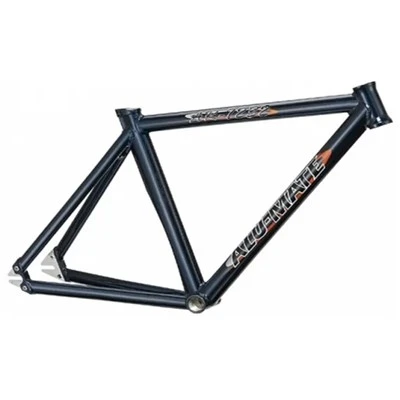
Now, if you’re someone who’s looking to get started with your own E-city bike line, or a shop that wants to stock custom frames, I’m here to help. No matter if you’re ordering 50 frames or 500, we can walk through what you need, give you a tailored quote, and make sure you get a frame that’s reliable, fits your budget, and works for your riders. If you’ve got questions about specs, MOQs, or just want a price that’s actually customized to your order, hit me up. I don’t do generic quotes, and I don’t do hidden fees—what you see is what you get, and we’ve got over 10 years of making E-city frames that riders actually love.
Mountain Bike Frame Reference:
- National Bicycle Dealers Association. (2023). E-Bike Frame Manufacturing Cost Analysis & Market Trends. NBDA Industry Report.
- European Cyclists’ Federation. (2022). Materials and Production Standards for E-City Bike Frames. ECF Technical Brief.
- Global Industry Analysts. (2024). Electric Bicycle Frame Market: Material, Application, and Regional Demand Forecast. GIA Market Research Report.
ALU-MATE Metal Industrial Co., Ltd.
As one of the most professional e-city bike frame manufacturers and suppliers in Taiwan, we have world-leading production equipment and strong manufacturing capabilities. We warmly welcome you to wholesale advanced e-city bike frame from our factory. Contact us for customized service and OEM service.
Address: NO.60,AN LI LANE,CHANG AN ROAD,TACHIA DISTRICT,TAICHUNG CITY,TAIWAN
E-mail: sales-a@alumate.com.tw
WebSite: https://www.alu-mate.com/
