Hey there! If you’ve ever worked with plant-based capsules for supplements, nutraceuticals, or even pharma, chances are you’ve run across HPMC capsules. As a capsule supplier, I get asked this question all the time—usually mid-conversation with a formulator who’s either dealing with production headaches or trying to figure out if switching to HPMC is worth ditching their old gelatin capsules. The exact question? Do HPMC capsules actually stick to the stuff you fill inside them? HPMC Capsules
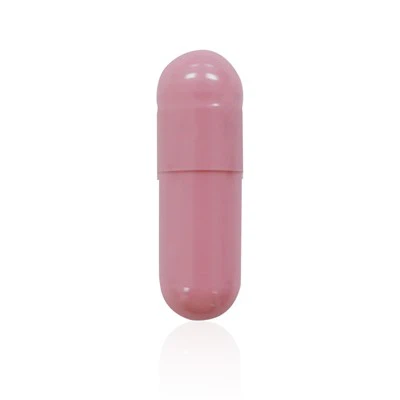
Let me cut to the chase first: it’s not a yes/no answer. Most of the time, no, they don’t. But there are some pretty specific scenarios where sticking becomes a real problem—and that’s the stuff I see folks mess up all the time. I’ve been in this game for almost a decade, so I’ve watched formulators pull their hair out over this, and also seen teams nail it by tweaking a few simple things. Let’s break this down like we’re chatting over coffee, not a 100-page technical paper.
First, let’s get super basic about what HPMC even is, for anyone who’s new. Hydroxypropyl Methylcellulose—aka hypromellose, which is the fancy official name—comes from plant cellulose, right? No animal products, which is why vegans, vegetarians, and even kosher/halal folks go crazy for these. Gelatin is animal-based, so HPMC is the go-to for anyone avoiding that. The capsule shells themselves are mostly cellulose, water, and a little bit of plasticizer (usually glycerin or sorbitol) to keep them flexible, not brittle.
Now, why would a capsule stick to its filling? Think of it like a plastic bag. If you crumple a dry plastic bag and leave it next to something sticky, it might cling a little—but if that plastic absorbs moisture, or the thing inside is super reactive, it can get way more stuck. Same idea with HPMC capsules. The shell is porous, not as solid as, say, a hard plastic bottle. So if your fill material is interacting with the shell too much, that’s when adhesion happens.
Let’s talk about the main reasons this actually happens, because that’s the useful part. First, moisture content of the filling and the environment. HPMC loves water—no shame, it’s hygroscopic. If your fill material has a high moisture content (like above 5-6% or so), or you’re filling in a really humid factory (think over 40% relative humidity), the capsule shell will start to absorb that moisture. When that happens, the shell’s structure softens, and it sticks to whatever’s around it—especially if the fill is wet or has its own liquid components. I once had a client who was filling a powdered blend with 7% moisture (we usually recommend 2-5% for HPMC fills) in a factory with 55% humidity. Their production line was getting 15% of capsules stuck during closing, and by the time they finished packaging, half were leaking. We just adjusted their fill drying to 3.5% and upped the factory AC to 38% RH, and that problem was gone in a week.
Second, what’s in the fill material itself. Not all powders are created equal. Super hygroscopic fills—like things with vitamin C, herbal extracts, or certain amino acids—can leach moisture right into the capsule shell, turning that softening we talked about into actual adhesion. Then there’s oily or greasy fills. Wait, hard HPMC capsules are for powders, but some people try to fill semi-solids or oils, even though they’re not designed for that. Oil breaks down the capsule’s plasticizer over time, and that leads to the shell sticking to the fill. I had a client who tried filling liquid fish oil into HPMC hard capsules (big no-no, by the way—we have soft gelatin for that) and within 24 hours, every capsule was stuck together so bad they had to throw the entire batch. That’s a avoidable mistake. Also, some fillers and glidants used in powder blends—like magnesium stearate, which is super common to keep powder flowing—wait, does that cause sticking? No, actually. Magnesium stearate is a lubricant, so it prevents adhesion, not causes it. The problem is if you use way too much of something like fumed silica, but mostly it’s the reactive, high-moisture stuff.
Third, how you’re handling and storing the capsules before and after filling. If you leave HPMC capsules sitting out in the open for days before filling, they’ll absorb ambient moisture and get soft before you even load them into the machine. Then when you fill them, they’re way more prone to sticking. We always tell clients to store HPMC capsules in airtight containers with a desiccant packet, just like you get with meds, until they’re ready to use. And after filling, you should package them right away in bottles with desiccants too—especially if they’re going to be shipped to a hot, humid place like Southeast Asia or South America. I’ve seen batches that were perfect right after filling get ruined because the packaging team forgot to add desiccants, and they sat in a shipping container for two weeks in 90°F heat with 80% humidity. By the time they arrived, every capsule was stuck together.
Wait, but let’s get back to the original question: do they adhere under normal conditions? Let’s define “normal conditions”—manufacturing at 35-45% RH, fill moisture 2-5%, standard powder blends, stored in airtight packaging with desiccants. In that exact scenario, I’d say the adhesion rate is less than 0.1%. That’s basically zero for production lines. I’ve been supplying HPMC capsules for years, and the only sticking issues I’ve seen are when someone strays from those normal conditions. The whole point of HPMC is that it’s a drop-in replacement for gelatin capsules, right? Most formulators switch and don’t have any sticking problems at all.
Is there a difference between HPMC from different suppliers? Oh, absolutely. Not all HPMC is the same. Some manufacturers use cheaper grades that have inconsistent moisture levels in the shell, or less plasticizer, so they get soft easier. At our company, we test every batch of HPMC capsules for moisture content (we keep it at 4-6%, perfect balance for flexibility), and we use a specific grade of HPMC that’s engineered to resist absorption from common powder blends. We also add a tiny amount of a lubricant to the inner surface of the capsule that prevents sticking—nothing weird, it’s all food-grade, just enough to stop adhesion without affecting the capsule’s properties. I can’t tell you how many clients came to us after switching to a cheap HPMC supplier and dealing with sticking, and once they switched to our capsules, the problem went away. That’s why we’ve built our reputation on consistent quality—no guessing, no surprises.
Another thing to note: if you’re using HPMC capsules for a specific use case, like time-release or enteric coating, does that change anything? No, not really. The coating is on the outside of the shell, so it doesn’t interact with the fill material. We’ve done tons of tests with enteric-coated HPMC capsules, and as long as the fill is within the normal parameters, there’s no adhesion. The coating just makes them dissolve in the intestine instead of the stomach, so that’s unrelated to sticking.
Wait, let’s address a common myth I hear all the time: “HPMC sticks more than gelatin.” No, that’s not true at all. Gelatin is way more hygroscopic than HPMC. If you have a really high-moisture fill, gelatin capsules will get soft and stick way faster than HPMC. The only time gelatin might win is if you’re filling something super oily, but again, hard gelatin isn’t designed for that either. I’ve had a formulator test our HPMC against a leading gelatin brand with their high-moisture powder, and the HPMC had a 0.05% adhesion rate, while the gelatin had 2.1%—that’s a huge difference.
So what can you do if you are seeing adhesion with HPMC capsules? First, check your factory humidity—use a hygrometer, it’s cheap. Second, test your fill moisture—aim for 2-5%, not higher. Third, make sure you’re using a good desiccant in your packaging. Fourth, if you’re using a new supplier, switch to a reputable one that tests their batches for consistency. If you’re doing all that and still having issues, maybe adjust your powder blend—cut back on super hygroscopic ingredients, or add a tiny bit more glidant, but usually that’s overkill.
At the end of the day, the answer is: HPMC capsules don’t adhere to their filling material under normal, standard manufacturing and storage conditions. The sticking that does happen is almost always avoidable, and it’s tied to environmental factors, fill properties, or improper handling—not the capsules themselves. That’s why we’ve spent years perfecting our HPMC capsule formula to minimize that risk, so our clients can focus on their products, not fixing capsule problems.

If you’re dealing with sticking issues, or just want to talk through what kind of HPMC capsules would work best for your specific fill, feel free to reach out. We work with small supplement brands and big pharma companies, so we can tailor a solution for whatever you need. No sales pitch fluff, just straightforward answers to whatever questions you have.
HPMC Capsules References
- FDA. (2021). Hypromellose Capsules and Their Use in Oral Dosage Forms. Center for Drug Evaluation and Research.
- International Society for Pharmaceutical Engineering (ISPE). (2020). Handling and Storage of Oral Hard Shell Capsules. Pharmaceutical Manufacturing Guide.
- Patel, M. et al. (2019). Comparative Evaluation of Gelatin and HPMC Capsules for Adhesion to High-Moisture Powder Blends. Journal of Pharmaceutical Sciences, 108(4), 1356-1362.
- United States Pharmacopeia (USP). (2022). Hypromellose Capsules Monograph. USP 45-NF 40.
Hubei Kornnac Pharmaceutical Co., Ltd.
Hubei Kornnac Pharmaceutical Co., Ltd. is one of the most professional hpmc capsules manufacturers and suppliers in China, specialized in providing high quality OEM service. Welcome you to buy bulk customized hpmc capsules at competitive price from our factory. Also, samples are available.
Address: No.439 Hebei Avenue, Chibi, Hubei Province, 437300, China.
E-mail: service@kornnaccaps.com
WebSite: https://www.kornnaccaps.com/
