Hey there, ever wondered how that tiny glass thread carrying 99% of the world’s internet traffic (yep, fiber) actually comes to life? As someone who’s been in the fiber supply game for over a decade—chasing down the best core-clad ratios, tweaking buffer coatings to survive drop cable pulls, and troubleshooting fusion splice losses that make my team stay late—I can tell you this isn’t just “melting glass and stretching a wire.” It’s a super precise, 10-step process that’s equal parts engineering magic and meticulous attention to the tiny details that make or break performance. Let’s break this down like I’d explain it to a new customer who just ordered their first bulk spool and asked, “Wait, how’d you make this stuff?” Optical Fiber
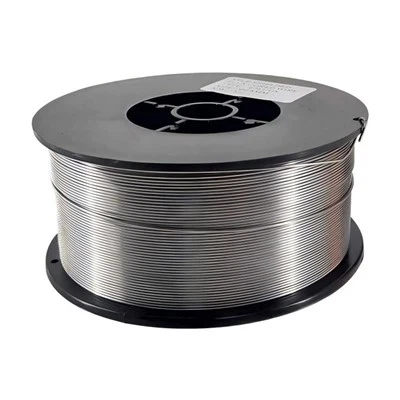
First, let’s set the scene. Back in the day, old fiber was made with the crucible method, basically dumping glass goop into a hot pot and pulling it, which made super variable stuff. Not great for today’s gigabit internet, 5G backhauls, or the data centers we all rely on. Now we use something called the Modified Chemical Vapor Deposition (MCVD) process, and it’s the gold standard for low-loss, high-bandwidth fiber. I’ve seen the machines—they’re this big, metal chamber that looks like a cross between a spaceship cockpit and a chemistry lab set, and they run 24/7 on our production floor. No shortcuts here.
Step one? Making the preform. Think of a preform like a giant, solid glass “candle” that’ll get stretched into fiber later. Here’s the boring (but critical) part: we start with a pure synthetic silica rod, since natural silica has impurities that soak up light and cause signal loss. We load that rod into the middle of the MCVD chamber, then heat the outside of the chamber with this super hot torch—like 1,900°C (that’s 3,450°F, way hotter than your kitchen oven) hot—to rotate the chamber nonstop. Why rotate? So the glass layers we’re about to add don’t have weird thickness spots, which would mess with the light path.
Now we pump in gases. First, we add gases like silicon tetrachloride and germanium tetrachloride. When those hit the hot torch, they vaporize and react, turning into tiny silica particles—think of it like smoke, but for glass. Those particles stick to the inside wall of the rotating chamber, and we keep adding more until we’ve built up two distinct layers: the core and the cladding. The core is the heart of the fiber; we dope it with germanium to make its refractive index just a tiny bit higher than the cladding. That difference is non-negotiable—it’s what makes light bounce along the core instead of leaking out into the cladding, right down the line. If we mess up that index by even 0.1%? We’re looking at way more signal loss, which means our customer has to add expensive amplifiers every few miles. That’s a bad call on our end, so our quality team tests the index of every preform before we even touch it.
Once those layers are built up, we keep heating the chamber. The tiny silica particles sinter, or melt together into a solid, clear glass rod—no bubbles, no gaps, no imperfections. That’s the preform. I’ve held a preform before: it’s like a big, clear pencil, but 1 to 2 meters long and only a couple centimeters thick. Kind of satisfying, honestly, after all that time watching the torch spin.
Next step: drawing the fiber. This is where the magic happens—turning that 2-centimeter preform into a 125-micron-thick fiber, that’s thinner than a human hair (your average human hair is like 70 microns, for reference). We load the preform into a furnace that’s set to 2,100°C, hotter than the last step, at the top of a drawing tower—our towers are like 20 meters tall, so the fiber has room to cool properly. We feed the preform into the furnace, and the tip melts into a goopy glass droplet that drops down, and we pull it with this precision spool at the bottom of the tower. The pulling speed? I swear, it’s like watching a machine paint a super fine line, but we’re pulling at 10 to 20 meters per second. That’s not fast enough to get jitter, right? 10 meters of fiber per second, so a 1-kilometer spool takes only a minute. Wild.
Now, here’s the part most people don’t talk about: cooling. If we just pulled that super hot glass fiber and spooled it right away, it’d be super fragile, like glass that cracks when you breathe on it. So we have a long cooling tube right after the furnace, blowing filtered, dry air to bring the fiber’s temperature down to like 50°C before it touches anything else. No condensation, no sudden temperature changes that cause microcracks—those would lead to breaks later, when someone’s pulling cable underground. We check the temperature every millimeter, because even a 10-degree spike can mess things up.
Once it’s cool, we add the buffer coating. This is a thin, urethane acrylate layer—like a glass hair with a tiny plastic coating, about 250 microns thick total. Why add this? Bare glass fiber scratches super easily, even from a tiny dust particle, and a scratch can become a break when you’re pulling it or bending it. We have two coats, actually: a soft inner buffer to absorb tiny vibrations, and a hard outer buffer to protect from abrasions. We use a special coating die—this tiny nozzle that applies the coating evenly, no thick spots, no thin spots. If the coating is even off by 5 microns, the fiber’s bend sensitivity goes way up, which is a huge problem for indoor cable, where you have to bend it around corners all the time.
After coating, we cure it with UV lights. We can’t have a goopy plastic coating on our fiber—needs to be rock solid. The UV lamps zap the coating as it moves past, hardening it in a fraction of a second. Then we run the fiber through a testing station that checks every inch for diameter, coating thickness, and any microcracks. If we find even a tiny defect, we cut that part out—we don’t send bad fiber to customers. I’ve seen us reject an entire preform run once because a coating die got a tiny speck of dust in it; we fixed it, but we didn’t cut corners to save money. Our reputation depends on that.
Once we confirm the fiber is perfect, we spool it onto large, lightweight spools (or drums, depending on what the customer needs—some want loose tubes, some want tight buffered for indoor use). We can put kilometers of fiber on one spool, no joints if the customer asks for continuous length. Now, wait—we can’t just send this fiber straight to a customer though. We do a final test called attenuation testing, which is basically shining a laser through the fiber and measuring how much light makes it all the way through. For single-mode fiber, which is what most of us use for internet, we aim for less than 0.2 decibels per kilometer loss at 1550nm—that’s the sweet spot for long-distance. If it’s higher, that means signal is leaking, so we send it back for reprocessing. No exceptions.
But wait, there’s another type of fiber too, multi-mode, which is what’s used for shorter runs, like between servers in a data center. The process is almost the same, except the core is thicker (like 50 microns vs. 9 microns for single-mode) so multiple light signals can bounce through. Same preform, same drawing, same coating—just tweaked during the preform step so the index difference is a little different.
Now, let’s talk about the stuff that happens before it’s a finished fiber we sell. We also make sure every spool gets labeled with batch numbers, so if there’s ever a problem (knock on wood), we can trace it all the way back to the preform, the torch operator, even the gas batch we used. That’s part of the supply game—accountability. I’ve had a customer call me at 2 a.m. because they had a fiber break on a construction site, and we could trace it back to a test spool from a week prior, explain exactly why it happened, and send a replacement same day. That’s the service I pride myself on, not just selling fiber.
Why does all this matter? Well, if fiber isn’t made right, your internet slows down. If the signal loss is too high, your 1Gbps plan turns into 300Mbps, and no one wants that. Or if the coating is wrong, the fiber breaks when a technician is pulling it through a wall, costing you thousands in downtime. That’s why we don’t cut corners on any step. For example, we use only 99.999% pure silica—no cheap impurities that would add noise to the signal. We calibrate our drawing tower’s pulling speed every shift, because even a 10% speed change can alter the fiber’s strength.
I remember a few years back, we had a new operator on the MCVD chamber who skipped a rinse step when loading a new preform rod. Turns out there was a tiny dust particle on the rod, and it created a bubble in the core layer. We caught it during the preform index test, tossed the whole rod, and retrained the operator. That’s the kind of thing that keeps me up at night—even one tiny particle can ruin kilometers of fiber. So we have two quality checks on every preform, three on the drawn fiber, and the final attenuation test before it leaves our warehouse.
Now, if you’re reading this and you’re an IT manager, telecom engineer, or contractor who’s tired of fiber that breaks mid-install or slows down your network, let’s be real: not all fiber is made the same. Some cheap suppliers use the older crucible method, or skip the extra quality checks, to cut costs. We’re not that company. Every spool we ship is tested, traceable, and built to meet (or exceed) industry standards. Whether you need 1 kilometer of single-mode for a small office network, or 100 kilometers of multi-mode for a new data center, we can get you the right fiber, with the specs you need, on time.

I know this was a deep dive, but fiber isn’t just a commodity. It’s the backbone of everything we do now—video calls, streaming, cloud storage, 5G. When you order fiber from us, you’re not just getting a glass thread. You’re getting a product built by a team that cares about the details, that’s been doing this for years, that knows how a preform becomes a fiber that doesn’t fail when you need it most. If you’re ready to place an order, or just have questions about specs, pricing, or how we can customize fiber for your project, hit us up. No salesy scripts, just real talk from someone who’s in the shop floor every day, watching the machines spin and pull that glass. Let’s get your project powered by fiber that works, no surprises.
Molybdenum Heating Elements References:
- Senior, J. (2021). Fiber Optic Communications: Principles and Practices. Pearson Education.
- Marcuse, D. (1982). Light Transmission Optics. Van Nostrand Reinhold.
- Keiser, G. (2000). Optical Fiber Communications. McGraw-Hill.
Address: Wangjing Science and Technology Park, Guangshun North Street, Chaoyang District, Beijing
E-mail: sales@moly-tungsten.com
WebSite: https://www.moly-tungsten.com/
