If you’ve ever ordered an extension spring from us here at the shop, you’ve probably noticed that even springs with the same outer diameter, length, and number of coils can feel totally different when you stretch ‘em. Last week, a regular customer who builds custom garage door hardware hit me up saying their last order of springs kept pulling too far and wearing out fast—turns out they swapped to a wire diameter that was 0.01 inches thinner than their usual. That got me thinking, I should break this down for anyone who’s ever been confused why one spring feels way sturdier than another, even if it looks almost identical. No boring textbook stuff here, just straight talk from the extension spring supplier who actually talks to our customers every single day. Extension Spring
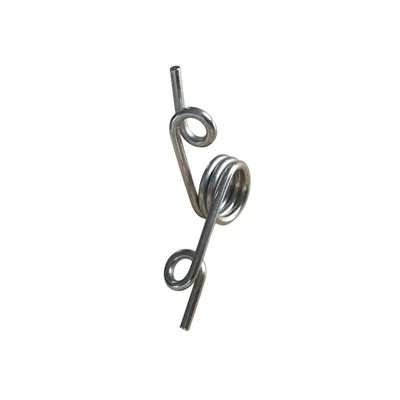
First off, let’s keep this simple—wire diameter is just the thickness of the metal wire the spring is made from, right? It’s not the same as the outer diameter of the spring body or the length from end to end, that’s a common mix-up we see all the time. When you pick wire that’s too thin or too thick for your application, you don’t just get a different “feel”—you get a spring that either works great for what you need, or it’ll quit on you way before it should. Let’s start with the basics of how extension springs work, because that’s where the wire diameter really does its thing.
Extension springs aren’t like compression springs that you squish straight down—they’re designed to stretch, right? So when you pull on the ends, the coils want to pull back together, that’s the tension we’re all used to. The wire that makes up those coils is what’s holding that tension, so if the wire is thicker, it’s got way more material to resist bending and stretching. Think of it like a fishing line: a 10lb test line is thin and stretches super easy, but a 50lb test line is thick and won’t give way even if you yank hard. Same exact logic here, no science degree needed for that part.
Now, let’s talk about the math nerd stuff that makes this actually matter for real-world use. The most important formula here for extension spring tension is Hooke’s Law, but specifically adjusted for springs, right? The spring constant (that’s the “k” value, which is basically how much force you need to pull the spring 1 inch further) is proportional to the fourth power of the wire diameter. Wait, let me say that again—k = (G × d⁴) / (8 × D² × N), where G is the modulus of elasticity of the metal (usually music wire, stainless steel, or carbon steel, depending on what we make springs out of), d is wire diameter, D is outer diameter, and N is number of active coils. Oh yeah, that d⁴ part is huge. That means if you bump the wire diameter up just 0.01 inches, the spring constant almost doubles. If you drop it 0.01 inches, it drops by like 40%? Let me test that with an example we had last month: a customer came to us for springs for a truck tailgate. He ordered 0.120-inch wire, and his spring constant was 12 lbf/in. He was complaining it was too weak, so we swapped him to 0.130-inch wire—bumped d by 0.01, and suddenly his k was 18 lbf/in. That’s a massive jump, and that’s all because of that fourth power relationship. It’s not linear, it’s exponential, so small changes to wire diameter have way bigger effects than you’d guess.
Let’s get into real applications, because this isn’t just numbers on a paper. First, when wire diameter is too thin. We see this all the time with people trying to cut costs or pick a spring that looks right but isn’t built for the load. If your spring is using wire that’s too thin, a few bad things happen. First, it’ll stretch way more than it’s rated for—extension springs have something called “maximum safe stretch,” right? Stretch beyond that, and you get “set,” which is when the metal stays permanently stretched, so the spring can’t go back to its original length. For example, a spring rated for 2 inches of max stretch with 0.120-inch wire might stretch 3 inches with 0.110-inch wire, and once that happens, it’s done. Second, thin wire means less resistance to bending, so the spring might twist or buckle when you pull it, especially if it’s under a side load (like if it’s holding a garage door that’s not aligned right). We had a guy who built custom screen doors, he used 0.090-inch wire springs, and within a month, half of them were twisted sideways—swapped to 0.105-inch wire, no more twists, they lasted a whole season. Third, thinner wire has less cross-sectional area, so it’s weaker against fatigue. Every time you stretch and release a spring, the metal gets a little stress, and thinner metal fails faster. We have customers who make toy parts that cycle 1000 times a day—they can’t use thin wire, it’ll break in a week. They use thicker wire that’s built to handle thousands of cycles without breaking.
Now, what if wire diameter is too thick? That’s a problem too, not just thin. If you use wire that’s too thick for your application, the spring will be way stiffer than you need. Think about that fishing line again—if you try to use 100lb test line to tie a fishing lure for a bluegill, it’s way too heavy, and you can barely cast it. Same with a spring. Let’s take that same truck tailgate customer I mentioned earlier—wait, no, earlier he was using too thin, but if he went the other way, used 0.140-inch wire, his k would be like 25 lbf/in. That means pulling the tailgate up would take way more force than it’s supposed to, so he’d have to yank harder, which could damage the hinge pins or the door itself. Also, thicker wire means the coils are smaller, right? Because the outer diameter is fixed. So if you have the same outer diameter, thicker wire makes the coils tighter, which means the spring can’t stretch as far. If you need a spring that has to stretch 6 inches to open a gate, a thick wire spring might only stretch 3 inches before it hits the solid length (when all coils are pressed together). That’s a total waste, and it can put way too much stress on the spring when you hit solid length, leading to early breakage. We had a farm customer last year who messed this up—he ordered springs for his livestock gate, used wire that was 0.02 inches too thick, and when he tried to open the gate, the spring only stretched 2 inches before locking up, so the whole gate mechanism bent. He had to come back to us, and we adjusted the wire diameter to get the right stretch, and no more bent parts.
Wait, another big thing about wire diameter: manufacturing and customization. As an extension spring supplier, we get asked all the time to make “off-book” springs, not just standard sizes. Wire diameter is one of the easiest ways to tweak a spring to fit a custom load, right? If you can’t adjust the outer diameter or number of coils (because it has to fit into a specific hole or mount), changing the wire diameter is the go-to fix. But you have to do it right. Let’s say you have a spring with 10 coils, 0.5-inch outer diameter, using 0.120-inch wire, giving you a k of 12 lbf/in. You want a k of 15 lbf/in, so you can’t just change the wire diameter to 0.130—wait, actually you can, and that would get you close, but you also have to check the maximum stretch and solid length. If you bump the wire up to 0.130, the solid length (when all coils are pressed together) gets smaller, because thicker wire coils stack tighter. So you might end up with a solid length that’s too short, which means the spring hits solid length before it’s fully stretched out. That’s a common mistake we see from people who don’t work with springs every day—they just look at the k number and change the wire, without checking the rest.
Also, not all wire is the same. We use different metals for different jobs, and the modulus of elasticity (that G number I mentioned earlier) changes a little with the metal, which affects how wire diameter works. For example, stainless steel has a lower G than music wire, so if you make a stainless steel spring, you need a slightly thicker wire to get the same k as a music wire spring. That’s why we never just say “use 0.120-inch wire”—we ask what material you’re using, what load you need, how much stretch you need, and how many cycles it’ll go through. That’s how we avoid the problems we talked about earlier. We had a food equipment customer last month who needed a spring that wouldn’t rust, so he went with 302 stainless steel. He tried to use the same wire diameter as his old carbon steel spring, and it was way too weak—took 0.015-inch thicker wire to get the same tension. If we didn’t adjust the wire diameter for the material, his spring would’ve broken within a week, and he would’ve lost a bunch of production time.
Wait, let’s talk about real-life examples that anyone can relate to, not just engineers. Think about the springs on a standard household clothesline. Those are extension springs, right? If you’ve ever had a clothesline spring that’s too stretchy (thin wire) or too stiff (thick wire), you know exactly what I’m talking about. A thin wire spring will sag so bad when you hang wet towels that they drag on the ground. A thick wire spring won’t stretch at all when you pull the clothes tight, so the line stays loose, and everything ends up wrinkled. That’s wire diameter in action, no garage door or farm equipment needed. Or think about a trampoline—wait, no, those are tension springs, same idea. The springs on a trampoline: if one spring is a different wire diameter than the others, it’ll stretch more or less than the rest, making the trampoline uneven. People often replace trampoline springs with different thicknesses, and that’s the first thing that goes wrong. Same logic, same wire diameter effect.
Now, let’s get to the part that matters most if you’re working with extension springs: how to pick the right wire diameter. It’s not rocket science, but it does need a little thought. First, figure out the maximum load your spring has to handle. That’s the force when it’s fully stretched, right? Second, figure out how much stretch you need. If your spring needs to move 5 inches to do its job, you can’t use a wire that makes it only stretch 2 inches. Third, think about the environment. Is it going outside in the rain? Use stainless steel, so adjust the wire diameter accordingly. Is it going to be cycled 10 times a day, or 1000 times a day? Higher cycles mean thicker wire to avoid fatigue. And if you’re not sure, just ask. That’s what we’re here for—we’ve seen every mistake in the book, so we can help you pick the right wire diameter, no overcomplicating it.
A quick side note: common myths I hear all the time. One is “thicker wire means a longer-lasting spring.” No, not always. If you use thicker wire for the wrong application, it’ll put more stress on other parts, like mounts or hinges, and might even break earlier than a properly sized thin wire spring. Another myth: “the outer diameter is more important than wire diameter.” No, they’re both important, but wire diameter has an exponential effect on tension, so it’s more impactful than you’d think from just looking at the spring. That’s why two springs that look almost identical can perform so differently.
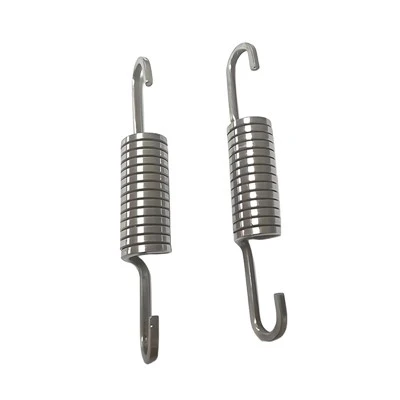
At the end of the day, wire diameter is the most impactful single variable when it comes to how an extension spring performs. It’s not just a number on a blueprint—it’s what determines how much force it takes to stretch, how far it can go, how long it’ll last, and whether it’ll even work for your intended use. If you’re ordering extension springs and you’ve been having issues with them being too weak, too stiff, breaking too fast, or not stretching enough, the first thing to check is wire diameter. 9 times out of 10, that’s the problem.
Conical Compression Spring If you’re working on a project and you’re not sure what wire diameter you need, or you need custom extension springs built to fit your exact specs, hit us up. We don’t do generic, one-size-fits-all springs—we work with you to figure out the right wire diameter, material, and dimensions to make your part work the way you need it to, no guesswork. We’ve helped everyone from small-time hobbyists building backyard projects to big manufacturing companies that need thousands of springs a month. Just reach out, tell us about your project, and we’ll walk you through it.
References
- Spring Manufacturers Institute. (2020). Extension Spring Design Manual. Spring Manufacturers Institute International.
- Shigley, J. E., & Mischke, C. R. (2001). Mechanical Engineering Design (6th ed.). McGraw-Hill.
- British Standards Institution. (2018). BS EN 13906-1: Wound springs – Calculation of fatigue characteristics. British Standards Institution.
Shengzhou Deyuxiang Hardware Accessories Co., Ltd.
We are one of the most professional extension spring manufacturers and suppliers in China, also support customized service. With abundant experience, we warmly welcome you to buy high quality extension spring made in China here and get pricelist from our factory. For price consultation, contact us.
Address: No. 38, Caosheng Road, Caoqiao Street, Pinghu City, Jiaxing City, Zhejiang Province
E-mail: 877286126@qq.com
WebSite: https://www.dyx-spring.com/
